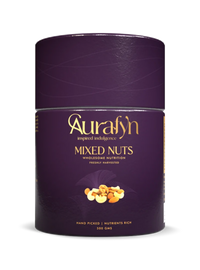
"Just a handful." That's the answer most doctors give when asked how many nuts to eat per day. But what does "a handful" actually mean — 10 almonds? 20? Should diabetics eat fewer? Pregnant women more? And does it differ between almonds, cashews and walnuts?
This guide gives you the evidence-based daily portion for each nut — backed by ICMR-NIN 2024 (India's official dietary guidelines),[12] USDA FoodData Central, the PREDIMED trial published in the New England Journal of Medicine, and other peer-reviewed research.

The Quick Answer (TL;DR)
| Nut | Healthy adult daily portion | Approx. count |
|---|---|---|
| Almonds (Mamra or California) | 20–25 g | 15–20 almonds |
| Cashews (W180 or W320) | 20–25 g | 10–15 cashews |
| Walnuts (Kashmir or California) | 25–30 g | 8–10 halves |
| Mixed (any combination) | 30 g total | 1 small handful |
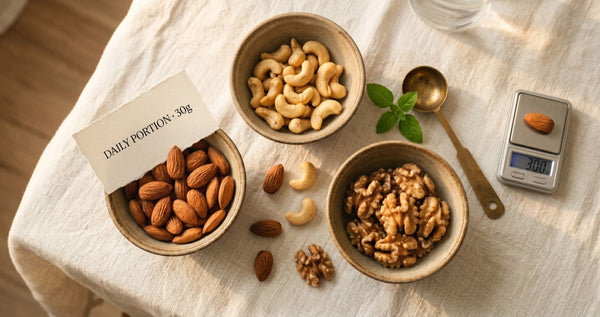
The universal rule: 30 grams of nuts per day — roughly one closed-fist-sized handful — is the dose used in the most successful nutrition studies on cardiovascular health.[1]
Thirty grams a day — one closed-fist handful — is the dose proven to cut major cardiovascular events by 30%.
Where the "30 Grams a Day" Number Comes From
The single most important nutrition study on nuts is PREDIMED (Prevención con Dieta Mediterránea) — a randomised controlled trial of 7,447 high-risk adults in Spain, published in the New England Journal of Medicine.[1] Participants assigned to the "Mediterranean diet with nuts" group consumed exactly:
- 15 g walnuts per day
- 7.5 g almonds per day
- 7.5 g hazelnuts per day
- Total: 30 g daily
The result, over a 4.8-year follow-up: a 30% reduction in major cardiovascular events (heart attack, stroke, cardiovascular death) compared to the control group.[1] This is why "30 grams of nuts" became the global benchmark — it's the dose at which clinical benefits are reliably demonstrated.
What Does 30 Grams Look Like?
Without a kitchen scale, here's how to visualise it:
| Nut | 30 g looks like… | Approx. count | Calories |
|---|---|---|---|
| Almonds | ~24 almonds | 23–24 | ~174 kcal |
| Cashews (W320) | A small palm-full | ~18 | ~166 kcal |
| Cashews (W180 King) | Slightly fewer kernels | ~10–12 | ~166 kcal |
| Walnuts | 10 walnut halves | ~10 | ~196 kcal |
| Mixed | One closed fist | — | ~170–180 kcal |
Calorie data: USDA FoodData Central.[2]
Grams to count: a quick chart
Kitchen scales measure grams; daily habits count nuts. Use these to turn one into the other. Counts are approximate, because kernel sizes vary.
| Weight | Almonds | Walnut halves |
|---|---|---|
| 10 g | ~8 | ~3 |
| 15 g | ~12 | ~5 |
| 20 g | ~16 | ~7 |
| 25 g | ~20 | ~8 |
| 30 g | ~24 | ~10 |
| 40 g | ~32 | ~13 |
| 50 g | ~40 | ~17 |
| Weight | W320 | W180 King |
|---|---|---|
| 10 g | ~6 | ~3–4 |
| 15 g | ~9 | ~5–6 |
| 20 g | ~12 | ~7–8 |
| 25 g | ~15 | ~8–10 |
| 30 g | ~18 | ~10–12 |
| 40 g | ~24 | ~13–16 |
| 50 g | ~30 | ~17–20 |
Going the other way: 15 W320 cashews weigh about 25 g, and 15 W180 King cashews about 40 g.
Daily Portions by Goal
For Heart Health (PREDIMED-style)
30 g/day total. This is the dose proven to reduce cardiovascular disease risk by 30% over 5 years.[1] Best mix: 15 g walnuts + 15 g almonds (or any combination totalling 30 g).
For Cholesterol Reduction
The Mah et al. 2017 trial showed that 28–64 g of cashews daily for 28 days reduced LDL cholesterol by 4.8% and total cholesterol by 3.9%.[3] If you're specifically targeting cholesterol, 30–40 g of cashews per day is supported by evidence — and the grade matters less than you'd think (see W180 vs W320 cashews).
For Brain Health & Cognition
The 2023 Barcelona adolescent walnut RCT (771 participants) used 30 g of walnuts daily for 6 months and showed improvements in sustained attention, fluid intelligence and reduced ADHD symptoms.[4] For adults focused on cognitive health, 30 g of walnuts daily is the right target.
For Weight Management
Despite being calorie-dense, nut consumption is not linked to weight gain when eaten in moderation. Studies show that 25–35% of nut calories may pass through undigested due to fibre.[5] Stick to 25–30 g/day, eaten as a snack between meals (not on top of meals).
For Diabetes (Type 2)
The 2018 Mohan et al. trial in 300 Asian Indians with type 2 diabetes used 30 g of cashews daily for 12 weeks, resulting in:[6]
- Systolic blood pressure ↓ by 4.9 mmHg
- HDL ("good") cholesterol ↑ by 1.7 mg/dL
- No negative effect on blood sugar or body weight
Diabetics: 25–30 g of nuts daily is safe and beneficial. Almonds and walnuts have the lowest glycaemic impact among nuts.
During Pregnancy
Walnuts are the only nut with significant plant omega-3 (alpha-linolenic acid, ALA), which supports foetal brain development.[7] The Institute of Medicine's Adequate Intake for ALA during pregnancy is 1.4 g/day — easily met by 20 g of walnuts.[8]
Pregnant women: 25–30 g of mixed nuts daily, with at least 15 g being walnuts. Always consult your obstetrician for personalised advice.
For Children (4–12 years)
The 2023 adolescent RCT showed cognitive benefits at 30 g/day in 11–16 year olds.[4] For younger children:
- 4–6 years: 10–15 g/day (5–6 almonds OR 4–5 cashews OR 3 walnut halves)
- 7–10 years: 15–20 g/day
- 11–16 years: 25–30 g/day
Important: whole nuts are a choking hazard for children under 4. Use nut butter or finely chopped nuts instead.
For Senior Adults (60+)
The WAHA (Walnuts And Healthy Aging) study used 30 g of walnuts daily for 2 years in adults aged 63–79, with no adverse effects on weight or metabolic markers.[9] Soaked overnight or lightly chopped nuts may be easier to chew.
Per-Nut Daily Limits (Why You Shouldn't Overdo It)
Almonds: don't exceed 50 g/day
Almonds are high in oxalates (~143 mg per 100 g), which can contribute to kidney stone formation in susceptible individuals.[10] 20–30 g daily is safe; consistently exceeding 50 g may pose risks for those with a history of kidney stones. (For the taste and oil difference between varieties, see Mamra vs California almonds.)
Cashews: don't exceed 50 g/day
Cashews are calorie-dense (553 kcal per 100 g) and contain naturally occurring sugars.[2] While the cholesterol-reduction trials used up to 64 g/day,[3] daily intake above 50 g may contribute to caloric excess for sedentary individuals.
Walnuts: don't exceed 60 g/day
Walnuts are the safest nut for higher consumption due to their high omega-3 content. However, exceeding 60 g/day adds 390+ calories — enough to cause weight gain over time without portion compensation elsewhere. (Curious which walnut to buy? See Kashmir vs California walnuts.)
Should You Soak Your Nuts?

The Indian Ayurvedic tradition of soaking almonds overnight has surprising scientific support:
| Benefit | Evidence level |
|---|---|
| Easier to digest | Moderate — soaking softens cell walls |
| Reduced phytic acid (improves mineral absorption) | Strong — soaking reduces phytate by 5–25%[11] |
| Increased vitamin availability | Limited evidence |
| Reduced enzyme inhibitors | Strong — for raw nuts |
| Different taste/texture | Subjective — many find soaked almonds sweeter and softer |
Verdict: soaking almonds overnight (8–12 hours in water) is safe and may improve digestion and mineral absorption. It's especially recommended for:
- People with sensitive digestion
- Pregnant women (better mineral absorption supports foetal development)
- Children (easier to chew, sweeter taste)
- Older adults
Best Time of Day to Eat Nuts
| Time | Best choice | Why |
|---|---|---|
| Morning (empty stomach) | 4–6 soaked almonds | Traditional Ayurveda; gentle on digestion; sustained energy |
| Mid-morning snack | Mixed handful (30 g) | Prevents lunch overeating; stable blood sugar |
| Pre-workout (30 min before) | 10–15 cashews | Quick energy + magnesium for muscle function |
| Evening with chai | 10–12 cashews or almonds | Replaces unhealthy biscuits/snacks |
| Bedtime (1 hour before) | 5–6 walnut halves | Magnesium + tryptophan may aid sleep |
Common Mistakes to Avoid
- Eating salted/roasted nuts daily — roasted nuts can contain harmful trans fats from oil, and salted nuts add ~200 mg sodium per serving. Choose raw, unsalted nuts whenever possible.
- Not measuring portions — a "handful" varies wildly. Once a week, weigh out 30 g to calibrate your eye.
- Eating nuts on top of meals (not instead of) — nuts work best as snack replacements, not additions. Lunch + 30 g nuts on top is 175+ extra calories.
- Buying flavoured/coated varieties — honey-roasted, masala or chocolate-coated nuts add sugar and calories. Stick to plain raw nuts.
- Eating only one type — variety matters. Almonds, cashews and walnuts have different micronutrient profiles. Mix them.
- Buying from open-bin stores — open-bin nuts oxidise faster and have higher rancidity rates. Buy in sealed packaging from FSSAI-licensed sellers.
How to Build Your Daily Nut Routine
The "Aurafyn 30 g" approach
If you have all three Aurafyn products, here's our recommended daily mix:
| Nut | Quantity | When |
|---|---|---|
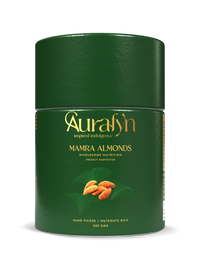
| Mamra Almonds (soaked) | ~10 g (8–10 almonds) | Morning, on empty stomach |
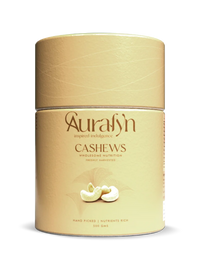
| W180 Cashews | ~8 g (5–6 kernels) | Pre-workout or with chai |
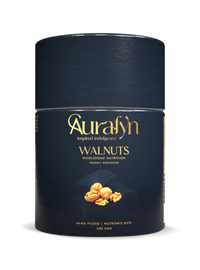
| Kashmir Walnuts | ~12 g (4 halves) | Evening or bedtime |
Total: ~30 g daily — the PREDIMED-validated heart-health dose.[1]
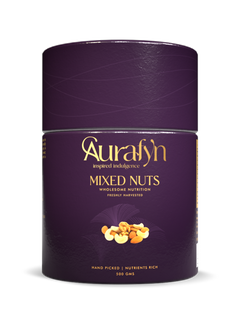
Aurafyn Premium Mixed Dry Fruits
Mamra almonds, Kashmir walnuts and W180 cashews — pre-blended so a single small handful is your full daily portion.
Frequently Asked Questions
How many almonds should I eat per day for weight loss?
Stick to 20–25 g (15–20 almonds) per day, eaten as a snack between meals. Almonds are calorie-dense, but their fibre and protein increase satiety, which can support weight loss when overall calories are managed.[5]
Is it safe to eat 30 grams of nuts every single day?
Yes. The PREDIMED trial ran for 4.8 years with daily nut consumption and showed only health benefits — including a 30% reduction in cardiovascular events.[1] The WAHA study ran for 2 years with daily walnuts in elderly adults with no adverse effects.[9]
How many walnuts should pregnant women eat?
20–30 g of walnuts daily (8–10 halves) provides ample alpha-linolenic acid (ALA) — the plant omega-3 that supports foetal brain development. Always consult your obstetrician for personalised guidance.
Can diabetics eat cashews?
Yes. A 2018 trial in Asian Indians with type 2 diabetes showed that 30 g of cashews daily for 12 weeks reduced blood pressure and increased HDL cholesterol with no negative effects on blood sugar or weight.[6]
How many almonds should children eat?
Age-dependent: 4–6 years, 5–6 almonds (10–15 g); 7–10 years, 8–12 almonds (15–20 g); 11–16 years, 15–20 almonds (25–30 g). Whole nuts are a choking hazard for children under 4 — use nut butter or chopped nuts.
Is it better to eat soaked or raw almonds?
Both are healthy. Soaking overnight reduces phytic acid by 5–25%,[11] which improves mineral absorption (especially iron and zinc), and may make almonds easier to digest. Raw almonds retain all original nutrients but are slightly harder to digest.
What's the best time to eat nuts?
Mid-morning or pre-workout for sustained energy. Four to six soaked almonds first thing in the morning is a traditional Indian practice with reasonable scientific backing. Avoid large quantities right before bed — though 5–6 walnut halves an hour before sleep may aid magnesium intake.
Can I exceed 30 grams if I exercise heavily?
Yes. Athletes and very active individuals can safely consume 40–60 g of nuts daily as part of their increased calorie needs. The upper limits (~50 g for almonds/cashews, ~60 g for walnuts) apply mainly to sedentary or moderately active people.
The Bottom Line
For most healthy Indian adults, the right daily portion is 30 g of mixed nuts — about one small handful. This is the dose used in major clinical trials including PREDIMED, which demonstrated a 30% reduction in cardiovascular disease risk over 5 years.[1]
Mix your nuts. Choose raw and unsalted. Buy from FSSAI-licensed brands with transparent grade disclosure. Soak almonds overnight if your digestion is sensitive. And don't add nuts on top of an already heavy meal — replace unhealthy snacks with them.
If you want premium-grade options:
- Aurafyn Iranian Mamra Almonds — for the morning soaked routine
- Aurafyn W180 King Size Cashews — for evening snacking
- Aurafyn Kashmir Walnuts — for the bedtime omega-3 boost
- Aurafyn Mixed Dry Fruits — the pre-portioned daily blend
References & Further Reading
- Estruch R, Ros E, Salas-Salvadó J, et al. Primary Prevention of Cardiovascular Disease with a Mediterranean Diet (PREDIMED)New England Journal of Medicine, 2018; 378(25):e34 — RCT, 7,447 participants, 4.8-yr follow-up
- Almonds (FDC 170567), Cashews (170162), Walnuts (170187), raw — nutrient compositionUSDA FoodData Central
- Mah E, et al. Cashew consumption reduces total and LDL cholesterol: a randomized, crossover, controlled-feeding trialAmerican Journal of Clinical Nutrition, 2017; 105(5):1070–1078
- Pinar-Martí A, et al. Walnut consumption & neuropsychological development in adolescents (RCT)eClinicalMedicine, 2023; 59:101954
- Mattes RD, Kris-Etherton PM, Foster GD. Impact of peanuts and tree nuts on body weight and healthy weight loss in adultsThe Journal of Nutrition, 2008; 138(9):1741S–1745S
- Mohan V, et al. Cashew nut consumption increases HDL cholesterol and reduces systolic blood pressure in Asian Indians with type 2 diabetes: a 12-week RCTThe Journal of Nutrition, 2018; 148(1):63–69
- Ros E. Health benefits of nut consumptionNutrients, 2010; 2(7):652–682
- Dietary Reference Intakes — ALA Adequate Intake (1.4 g/day in pregnancy)Institute of Medicine (US), National Academies Press, 2005
- Sala-Vila A, et al. Effect of a 2-year diet intervention with walnuts on cognitive decline — the WAHA study (RCT)American Journal of Clinical Nutrition, 2020; 111(3):590–600
- Massey LK. Food oxalate: factors affecting measurement, biological variation, and bioavailabilityJournal of the American Dietetic Association, 2007; 107(7):1191–1194
- Gupta RK, Gangoliya SS, Singh NK. Reduction of phytic acid and enhancement of bioavailable micronutrients in food grainsJournal of Food Science and Technology, 2015; 52(2):676–684
- Dietary Guidelines for Indians, 2024Indian Council of Medical Research — National Institute of Nutrition (ICMR-NIN)
Aurafyn Journal. “How Many Almonds, Cashews & Walnuts Should You Eat Per Day? (2026 Evidence-Based Guide).” Updated 11 Oct 2026. aurafyn.com/blogs/journal/how-many-almonds-cashews-walnuts-per-day-india