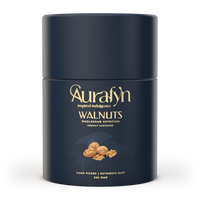
Kashmir Walnuts hand-cracked halves
From high-altitude orchards in Jammu and Kashmir — cracked by hand.
Kashmir walnuts come from high-altitude orchards where a shorter, colder season fills out the kernel. Thinner shells, plumper light-coloured halves, and a richer flavour than the California varieties that dominate Indian shelves. Cracked by hand, which keeps more halves whole.
How to buy well
Why altitude matters
A shorter, colder season slows the crop. The kernel fills out more and carries more flavour than a fast-grown lowland nut.
Reading a good walnut
Thin shells, pale plump halves, no shrivelling at the edges. Dark or oily-looking kernels have been sitting too long.
Halves, not pieces
Cracking by hand keeps more halves intact. Pieces and quarters are sold cheaper for a reason.
Tubes, not pouches
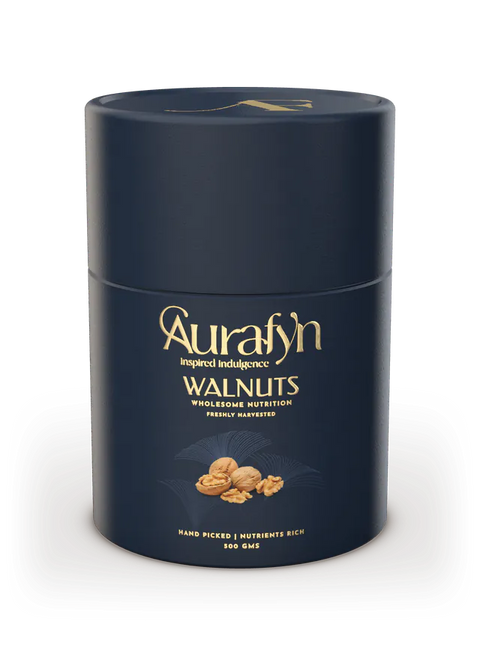
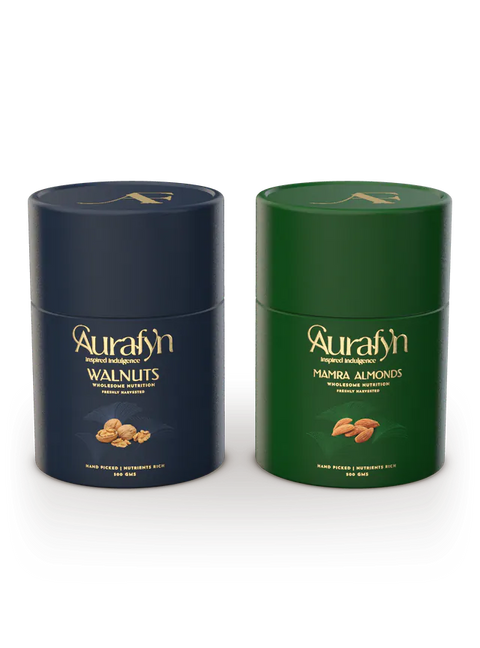
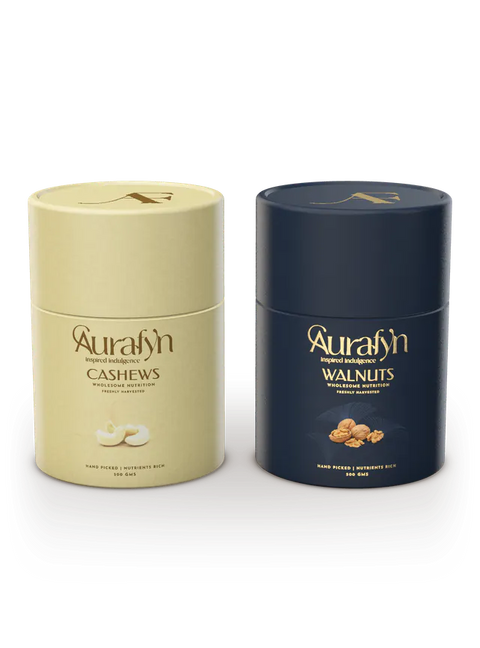
Airtight paper tubes keep natural oils from oxidising, so every handful stays fresh.
What makes Kashmir walnuts different from California walnuts?
They grow at higher altitude, where the season is shorter and colder. The shells are thinner, the halves plumper and lighter in colour, and the flavour is richer. Ours are cracked by hand, which keeps more halves whole.
Are your walnuts polished or treated?
No. Unpolished and untreated, with no added oil and nothing applied to the kernel.
Are walnuts a good source of omega-3?
Yes. Walnuts are one of the richest plant sources of ALA, around 2.5 g per 30 g serving, alongside antioxidants, magnesium and copper.
How many walnuts should I eat a day?
A usual portion is 4 to 6 whole walnuts.
How long do they stay fresh?
Up to 6 months. Reseal the tube after each serving and keep it away from sunlight. Refrigerate in hot or humid climates.
Wishlist
Wishlist is empty.
Wishlist
Compare
Your cart is empty.
Return to shop