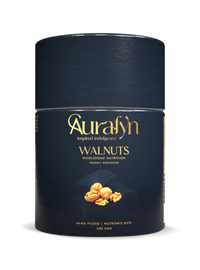
Keep dry fruits airtight, cool, dark and dry. In a cool, dry season a sealed jar in a cupboard is enough for almonds and cashews; through an Indian summer or monsoon, move them to the fridge. Walnuts are the most delicate and belong in the fridge for most of the year. Anything you won’t eat within a month goes in the freezer. A paint-like smell or a harsh, bitter taste means rancid, and any mould means the whole batch goes.
Nuts rarely spoil all at once. They fade: the crunch softens, the sweetness flattens, and one day a walnut tastes of paint. Four things do the damage. Heat and air turn the natural oils rancid, light speeds that up, and moisture invites mould. Nuts also soak up the smells around them. Storing dry fruits well is simply a matter of keeping all four out.
Why dry fruits go stale
The fat in a nut is what makes it taste rich, and it is also what goes wrong first. Oxygen slowly attacks the oil, and heat and light speed the reaction up. The result is rancidity: a stale, sharp or paint-like smell, and a bitter, harsh taste.
Not every nut is equally exposed. Walnut oil is high in polyunsaturated fat, which oxidises far more readily than the fats that dominate almonds and cashews.[4] That is why walnuts are always the first to turn, and why they deserve the coldest spot you have.
Moisture is the other enemy. Damp nuts lose their crunch, and in warm, humid weather they can grow mould. Cashews feel it first: in our experience they soften long before any of the three tastes stale. Shelled nuts also absorb moisture and smells easily, so an open bowl on the counter takes on the kitchen within days.[3]
Where to keep them, by season
The Almond Board of California puts the ideal at below 10°C and below 65% humidity, where almonds keep their quality for two years or more.[1] Most Indian kitchens are far warmer than that in summer, and far more humid in the monsoon. So the right place changes with the season.
| Your kitchen | Where to keep them |
|---|---|
|
Cool and dry most of a north Indian winter |
Almonds and cashews: an airtight jar in a cool, dark cupboard. Walnuts: the fridge; a cool cupboard only for what you will finish in a few weeks. |
|
Hot summer |
All three in the fridge, in airtight containers. |
|
Humid monsoon, coastal cities |
All three in the fridge, in airtight containers. Humidity, not heat, is what invites mould. |
|
Stock for a month or more any season |
The freezer, sealed tight, taking out a week’s portion at a time. |
The California Walnut Board goes further for walnuts: the fridge if you will use them soon, and the freezer if you are keeping them a month or longer.[2]
The right container
- Airtight, always. A glass jar or a steel container with a tight lid. The less air inside, the better, so a small jar filled well beats a large one half empty.
- Away from strong smells. Keep nuts far from onions, garlic, spices and fish, and never in an open bowl in the fridge. They absorb odours easily.[3]
- Away from the stove and the window. A cupboard beside the gas or in afternoon sun is the warmest place in the kitchen.
- One nut to a container. Walnuts turn first; kept apart, they cannot take the almonds with them.
- A dry spoon. Wet hands and damp spoons carry moisture straight into the jar.
Our tubes, honestly
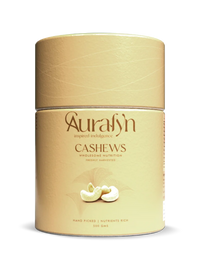
We pack every order fresh. Until then our cashews are kept vacuum-sealed, and their tubes are shrink-wrapped tight for the journey, because cashews lose their crunch quickly in ordinary air. Our paper tubes carry the nuts to you in good shape, but they are not a long-term home for every nut.

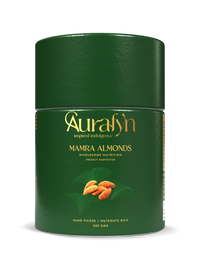
- Mamra almonds and walnuts keep well in their tube if you finish them within about a month. Close the lid firmly after each serving, and keep the tube in the fridge in hot or humid weather.
- Cashews stay in the tube if you will finish them within 7 to 10 days. If not, move them into an airtight glass or steel jar when they arrive.
- Anything you will keep longer than a month belongs in the freezer: a freezer bag with the air pressed out, or a glass jar.
If cashews do soften, they are not spoiled. A few minutes in a dry pan on low heat, or in an air fryer, brings the crunch back; let them cool before eating. Heat cannot fix a rancid taste, though.
Fridge and freezer without the damp
Cold storage has one trap: condensation. Open a cold jar in a warm kitchen and moisture settles on the nuts at once. Let the jar come to room temperature before you open it, or take out a week’s portion into a small jar and leave the rest sealed. Nuts need no thawing; frozen almonds and walnuts can be eaten within minutes of coming out.
Cold slows the clock but does not stop it. In general guidance, shelled almonds and walnuts keep about a year in the fridge, and walnuts two years or more in the freezer.[3] Best-before dates assume an ordinary cupboard, so go by the date on the pack, and buy what you will eat within a few months.
How to tell if they have gone off
- Smell. Fresh nuts smell faintly sweet or of almost nothing. A smell like paint thinner, oil paint or old cooking oil means rancid. The California Walnut Board’s advice is simple: throw them away.[2]
- Taste. A harsh, bitter or soapy taste that lingers. A walnut’s skin has a gentle, natural astringency; rancidity is sharper and stays in the throat.
- Look. Darkened, oily-looking patches, shrivelled kernels, fine webbing or insects.
- Mould. Any fuzzy or coloured spots. Some moulds produce aflatoxins, and the mould can reach further into the food than you can see, so discard the whole batch rather than picking out the spotted ones.[5]

Soaked almonds
Soaking is a morning ritual in many Indian homes, but a soaked almond is a damp almond, and damp nuts spoil quickly. Soak only what you will eat the next morning, in clean water in a covered bowl, and keep any extra in the fridge to eat the following day.
Common mistakes
- Buying a year’s supply in one go and keeping it in the cupboard.
- Storing the jar beside the stove, or on a sunny shelf.
- Mixing walnuts with almonds and cashews in one container.
- Opening a cold jar straight from the fridge in a warm room.
- Washing nuts before storing them.
- Leaving a bowl of nuts out for days for guests.
Cool, dark, dry and sealed. Those four words keep a good almond tasting the way it did the day it was packed.
Frequently asked questions
Should dry fruits be kept in the fridge?
In hot or humid weather, yes. Through an Indian summer or monsoon, the fridge keeps almonds, cashews and walnuts fresh far longer than a cupboard. In a cool, dry winter, almonds and cashews are fine in an airtight jar in a cool, dark cupboard. Walnuts are best in the fridge for most of the year.
Can I keep the nuts in the Aurafyn tube?
Mamra almonds and walnuts, yes, if you finish them within about a month. Close the lid firmly after each serving and keep the tube in the fridge in hot or humid weather. Cashews stay in the tube if you will finish them within 7 to 10 days; if not, move them into an airtight glass or steel jar when they arrive.
How long do dry fruits last?
It depends on the nut and how it is stored. In general guidance, shelled almonds and walnuts keep about a year in the fridge, and walnuts two years or more in the freezer. At room temperature the time is much shorter, especially in heat or humidity. Always go by the best-before date on the pack.
How do I know if almonds have gone bad?
Smell and taste them. Rancid almonds smell like paint or old cooking oil and taste harsh and bitter. Discard them, and discard the whole batch if you see any mould.
Can I freeze almonds, cashews and walnuts?
Yes. Freezing is the best way to keep nuts for more than a month. Seal them in a freezer bag with the air pressed out, or a glass jar, and take out a week’s portion at a time. They need no thawing.
How should I store dry fruits in the monsoon?
In airtight containers in the fridge. Monsoon humidity invites mould, so keep containers firmly closed, use a dry spoon, and let a cold jar reach room temperature before opening it so that moisture does not settle on the nuts.
Why do my walnuts taste bitter?
A gentle astringency comes naturally from the walnut’s skin. A harsh bitterness with a paint-like smell means the oil has gone rancid, and those walnuts should be thrown away. Keeping walnuts in the fridge or freezer prevents it.
Dry fruits ko kaise store karein taaki jaldi kharab na hon?
Airtight dabbe mein, thandi aur andheri jagah par rakhein. Garmi aur monsoon mein fridge mein rakhein; akhrot ko zyada tar saal fridge mein hi rakhein. Ek mahine se zyada ka stock freezer mein rakhein, aur hamesha sookha chammach istemaal karein.
References & Further Reading
- Shelf stability and shelf life: store almonds below 10°C and 65% relative humidityAlmond Board of California
- How to buy and care for walnutsCalifornia Walnut Board
- Harvesting and Storing Your Home Orchard’s Nut Crop (Publication 8005)University of California, Division of Agriculture and Natural Resources
- Oxidative stability of walnut kernel and oilPeer-reviewed literature
- Aflatoxin: a toxin you should mindConsumer Voice
Aurafyn Journal. “How to Store Dry Fruits: Keep Almonds, Cashews and Walnuts Fresh.” Updated 9 Oct 2026. aurafyn.com/blogs/journal/how-to-store-dry-fruits